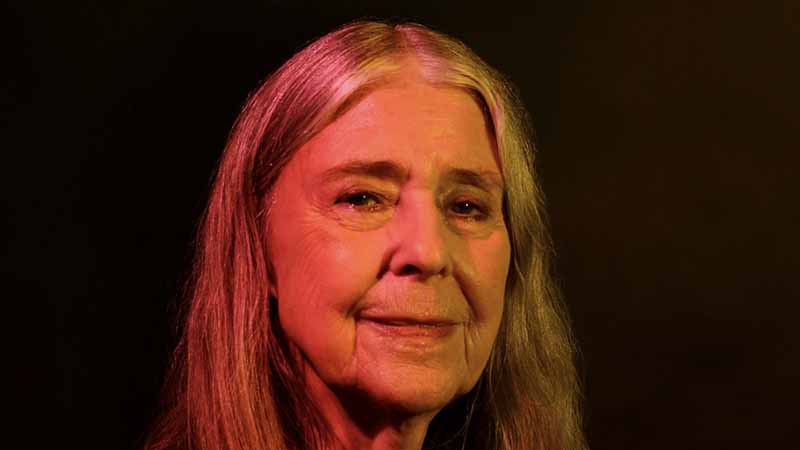
Margaret Hamilton, the computer scientist whose pioneering software helped land humans on the Moon, died September 30 at the age of 90.
Hamilton led the team at MIT’s Instrumentation Laboratory responsible for developing the onboard flight software for NASA’s Apollo missions. Her work helped make possible one of humanity’s greatest technological achievements, and she went on to play a major role in establishing software engineering as a discipline.
Hamilton joined MIT’s Apollo effort in 1965, when the Instrumentation Laboratory was developing the software that would guide spacecraft to the Moon and back. She became the first programmer hired for the project and, as the program expanded, rose to lead the team developing flight software for the crewed missions. By 1968, she was assistant director overseeing the Command and Service Module software team, part of an effort involving more than 400 people.
Her most famous contribution came during Apollo 11 in July 1969.
As Neil Armstrong and Buzz Aldrin prepared to land the lunar module Eagle, the Apollo Guidance Computer suddenly began reporting a 1202 alarm. The computer was being overloaded by data from a hardware problem, raising the possibility that it might not be able to handle the demands of the landing.
Hamilton’s team had anticipated precisely this kind of problem.
Their software was designed to prioritize the computer’s most important tasks while discarding less-critical work when necessary. Rather than bringing the landing to a halt, the computer could recover from the overload and continue running the software needed to guide the spacecraft.
Mission controllers in Houston trusted the system and allowed the landing to proceed. Armstrong and Aldrin reached the lunar surface, becoming the first humans to walk on another world.
The Apollo 11 incident was the most famous demonstration of an approach Hamilton had been developing throughout the program: software should be designed not merely to perform correctly under ideal conditions, but to anticipate mistakes and unexpected circumstances.
She learned that lesson in a particularly memorable way when her four-year-old daughter, Lauren, accidentally crashed an Apollo simulator after activating a program called P01 while the simulator was in flight. Hamilton proposed changing the actual flight software to prevent the same thing from happening during a mission, but the suggestion was initially rejected because engineers assumed trained astronauts would not make such a mistake.
During Apollo 8 in 1968, astronaut Jim Lovell inadvertently did exactly that. The resulting problem caused navigational data to disappear, and Hamilton’s team was called in to resolve it. Afterward, her proposed safeguards were incorporated into the software.
Hamilton’s path into computing had begun only a few years earlier. Born in Paoli, Indiana, in 1936, she studied mathematics at the University of Michigan before graduating from Earlham College in 1958. After moving to Boston, she took a temporary position in MIT’s meteorology department, where she worked on computer programs for weather prediction with meteorologist Edward Lorenz.
She later joined MIT Lincoln Laboratory, working on the SAGE air-defense system. There, she began developing an interest in software reliability at a time when software was still poorly understood and rarely treated as an engineering discipline in its own right. It would become one of Hamilton’s lasting legacies.
She popularized the term “software engineering” to emphasize that software deserved the same rigor and respect as other forms of engineering. What began as a term some colleagues regarded as a joke eventually became the name of an entire field.
Her achievements brought numerous honors, including NASA’s Exceptional Space Act Award, the Computer History Museum Fellow Award, the Intrepid Lifetime Achievement Award and induction into the National Aviation Hall of Fame. In 2016, President Barack Obama awarded her the Presidential Medal of Freedom, the United States’ highest civilian honor. Obama’s citation credited Hamilton with helping define software engineering and with creating the software architecture that contributed to humanity’s first steps on the Moon.
Hamilton became an increasingly recognizable figure in the years after Apollo. A photograph of her standing beside a towering stack of Apollo software printouts became an enduring image of the early computer age. The Apollo 11 software she helped develop was eventually released publicly on GitHub, and Hamilton was later honored as a Lego minifigure alongside other women whose work shaped NASA’s history.
Hamilton herself regarded the Apollo years not simply as a historic achievement, but as an extraordinary engineering challenge. “We had to find a way, and we did,” she recalled. “Looking back, we were the luckiest people in the world; there was no choice but to be pioneers.”
Margaret Hamilton leaves behind a legacy embedded in virtually every complex software system that depends on anticipating failure rather than simply hoping it never occurs. The principles she helped pioneer for Apollo — reliability, fault tolerance, defensive programming and rigorous systems engineering — remain fundamental to modern computing.
She is survived by her daughter, Lauren Hamilton; her son-in-law, Richard Selesnick; two grandsons; four great-grandchildren; and her siblings John, David and Kathryn. A memorial service is planned for spring in Cambridge, Massachusetts.

SCIFI.radio is listener supported sci-fi geek culture radio, and operates almost exclusively via the generous contributions of our fans via our Patreon campaign. If you like, you can also use our tip jar and send us a little something to help support the many fine creatives that make this station possible.