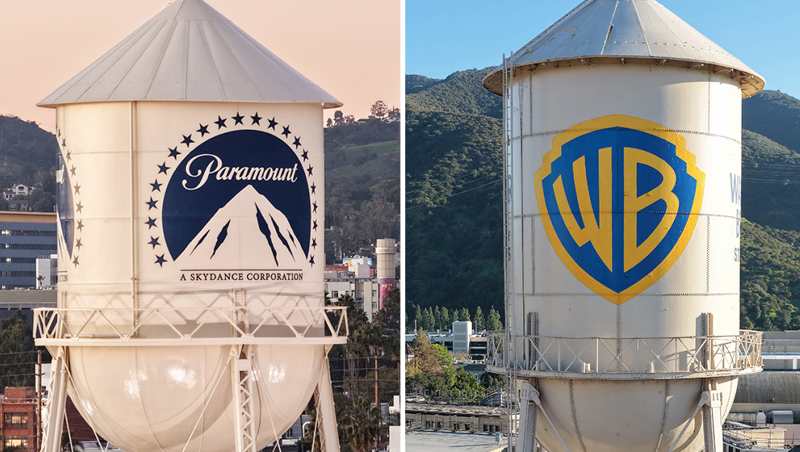
After days of marathon negotiations, Paramount Skydance and the state attorneys general have settled the blockbuster antitrust lawsuit over the $111 billion Warner Bros. Discovery acquisition. At a press conference called in Los Angeles, Attoruney General Bonta revealed the settlement with Paramount but stipulated at the beginning that the agreement wasn’t an endorsement of the deal.
The primary group mobilizing opposition to the Paramount–Warner Bros. Discovery merger condemned the state attorneys general settlement of their antitrust lawsuit to block the transaction.
Just minutes before California Attorney General Rob Bonta was to appear at a press conference to announce the details of the settlement, the Block the Merger Coalition put out a statement calling the proposed resolution “a bad deal for the future of film, entertainment, independent journalism, and a strong democracy in this country.”
“We are disappointed and angry that the interests of average Americans have been trampled to benefit oligarch billionaires,” the group said.
The coalition said in the statement, “The Ellisons and other forces arrayed against us, but that didn’t stop us and so many others from standing up. We are proud of what we accomplished, and together, our coalition will keep fighting. From the thousands of leaders in the film and entertainment industry and elected officials, to the hundreds of thousands who joined them to make their voices heard, even in the face of potential retaliation, this was a grassroots movement that proved Americans are not going to take this corruption anymore. That energy is not going away.”
“This isn’t the last we will hear of the Ellisons or the fallout of this merger – and it’s not the last you will hear from us. Block the Merger was never just about one merger, but about the harms of media consolidation and promoting a diversity of voices.”
Mark Ruffalo, a prominent opponent of the merger, weighed in on X earlier on Monday. “Gavin Newsom hands huge win to Trump and his billionaire cronies,” he wrote, referring to the governor’s involvement in reaching a settlement.
The fine print hasn’t been released yet, but Paramount mogul David Ellison praised the deal terms, saying: “We are grateful to Attorney General Bonta and his fellow AGs, as well as the WGA, for engaging in good faith to find a path forward to a resolution that serves all parties, and to Governor Newsom for his support throughout this process. Our shared aim was an outcome that best serves consumers, workers and — most importantly — the creative community so vital to the art of visual storytelling.”
The Paramount CEO added, “We’re confident this agreement does exactly that, memorializing a series of commitments that include 30+ films annually and expanded U.S. film production to help revitalize our industry here at home.”
The settlement clears Paramount to close the deal, which had a so-called $7 million-per-day ticking fee set to begin Oct. 1. The agreement allows the studio to avoid paying those costs assuming it can close in the next 10 days.
It comes after months of acrimonious public debate, with threats by Paramount to leave the state of California (Texas and Tennessee both courted the company), and accusations of antisemitism levied at some critics of the deal. More significantly, critics noted the Ellison family’s relationship to President Donald Trump, Rob Bonta’s own political ambitions and the hyper-politicized nature of dealmaking today as significantly troublesome issues.
The state attorneys general, led by California’s Bonta had sued to block the deal, alleging that the merger would give the combined Paramount-Warners too much control over basic cable TV and the theatrical film business. The Writers Guild of America later joined the fray, with a lawsuit that argued the merger would suppress wages and worsen working conditions for writers by creating a single mega-buyer of film and television programming. Earlier this year, consumers had also filed a complaint challenging the purchase. It’s concerning that all of this has apparently been waved aside, and it is difficult to believe that all these problems just magically went away.
To try to alleve the concerns about the reduction in choices for the consumer, Ellison, promised to release a minimum of 30 films per year theatrically. There are a lot of people in the industry who don’t think he can sustain that for long.
Bonta had maintained he’ll only accept structural remedies, which typically involve companies selling off parts of the combined business. It’s believed a sticking point for the states in any settlement involved Paramount operating the two studios as independent businesses and selling off parts of its cable business. Ellison doesn’t want to let go of CNN, for example.
Nobody knows yet what the divestitures are going to be, but they’re going to have major repurcussions for the movie and television industry in California, and it’s hard to imagine that there won’t be layoffs in the thousands, or perhaps tens of thousands. The damage to the local economy is likely to be profound.
The legal and public message jockeying in the court battle was contentious. Leading up to the deal, Paramount had said it would leave California if an agreement wasn’t struck by Oct. 1, when the so-called ticking fee starts accruing, regardless of the outcome of the lawsuits — a move Bonta had called “blackmail.” This came after the studio came to terms with Bonta and the WGA in a joint agreement to hold off on consummating the merger until a trial had determined whether it violated antitrust laws, though it was scheduled for next year.
Paramount had gotten the federal goverment and dozens of foreign regulators to agree to the purchase, and the Justice Department’s Antitrust Division is of the opinion that the acquisition will actually increase rather than decrease competition. On the ground in the United States, though, it makes Paramount one of the largest theatrical distributors in the country, displacing or absorbing others and potentially putting them out of business. It will also make them one of the biggest employers in Hollywood, giving them unprecedented power in contract negotiations with producers and other creatives. Hollywood’s reaction, generally, is that none of this is good for the industry as a whole.
Paramount has framed the merger as one that will boost competition, arguing it’s necessary to compete against tech giants like Netflix, Amazon and Apple. We’re not sure if we believe them. We’ll see.

SCIFI.radio is listener supported sci-fi geek culture radio, and operates almost exclusively via the generous contributions of our fans via our Patreon campaign. If you like, you can also use our tip jar and send us a little something to help support the many fine creatives that make this station possible.