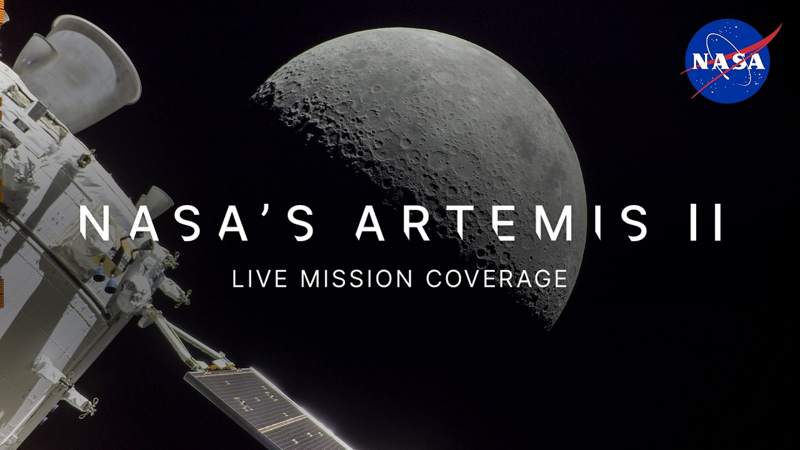
After more than half a century since humans last voyaged to the moon, NASA is hours away from a historic milestone. Artemis 2, the agency’s first crewed lunar mission since Apollo 17 in 1972, is set to lift off from Kennedy Space Center’s Launch Pad 39B today, April 1, 2026, at 6:24 p.m. EDT.
Four astronauts — led by Commander Reid Wiseman — arrived at the launch pad this afternoon aboard the iconic “Astrovan,” completing one of the final pre-launch milestones before boarding the Orion capsule. “It’s a great day for us, a great day for this team,” Wiseman told the gathered crowd during the crew walkout, drawing a round of applause from supporters and mission personnel alike.
The mood at Kennedy Space Center is one of optimism and careful precision. Technicians completed leak checks on the crew’s custom-fitted orange spacesuits — a new generation of gear that NASA says has been substantially reengineered from the shuttle era for improved safety and range of motion. Unlike the one-size-fits-most approach of previous programs, each suit is tailored individually to its astronaut.
On the pad, NASA’s colossal Space Launch System rocket — standing 322 feet tall and requiring 750,000 gallons of propellant — has been fully fueled with liquid hydrogen and is in the final topping-off stages for liquid oxygen in both its core stage and upper stage, known as the Interim Cryogenic Propulsion Stage (ICPS). The fueling process has gone remarkably smoothly, a welcome relief given that hydrogen leaks plagued earlier Artemis operations. Weather conditions are favorable, with an 80% probability of acceptable conditions at launch time, though a brief rain shower is possible in the early afternoon hours.
Once airborne, Orion will first enter Earth orbit and conduct proximity maneuvers near the spent ICPS upper stage — critical tests of the spacecraft’s ability to rendezvous with other hardware, a skill that will be essential for future crewed lunar landings. The spacecraft will then perform a series of engine burns to slingshot itself onto a looping trajectory around the moon, sending the four astronauts farther from Earth than any human beings have ever traveled.
The mission’s defining moment comes on day six, when Orion swings around the far side of the moon at an altitude of 4,000 to 6,000 miles above the lunar surface — a breathtaking vantage point no human has ever seen firsthand. The 10-day journey concludes with a fiery re-entry into Earth’s atmosphere at roughly 25,000 miles per hour, ending in a parachute-assisted splashdown in the Pacific Ocean off the coast of San Francisco, where a U.S. Navy recovery ship will be waiting.
Artemis 2 carries no landing — that’s reserved for Artemis 3 — but its significance cannot be overstated. It is a shakedown flight, a proof of concept, and an act of human daring all at once. Tonight, for the first time in a generation, astronauts will leave Earth behind and point their spacecraft toward the moon.
SCIFI.radio is listener supported sci-fi geek culture radio, and operates almost exclusively via the generous contributions of our fans via our Patreon campaign. If you like, you can also use our tip jar and send us a little something to help support the many fine creatives that make this station possible.