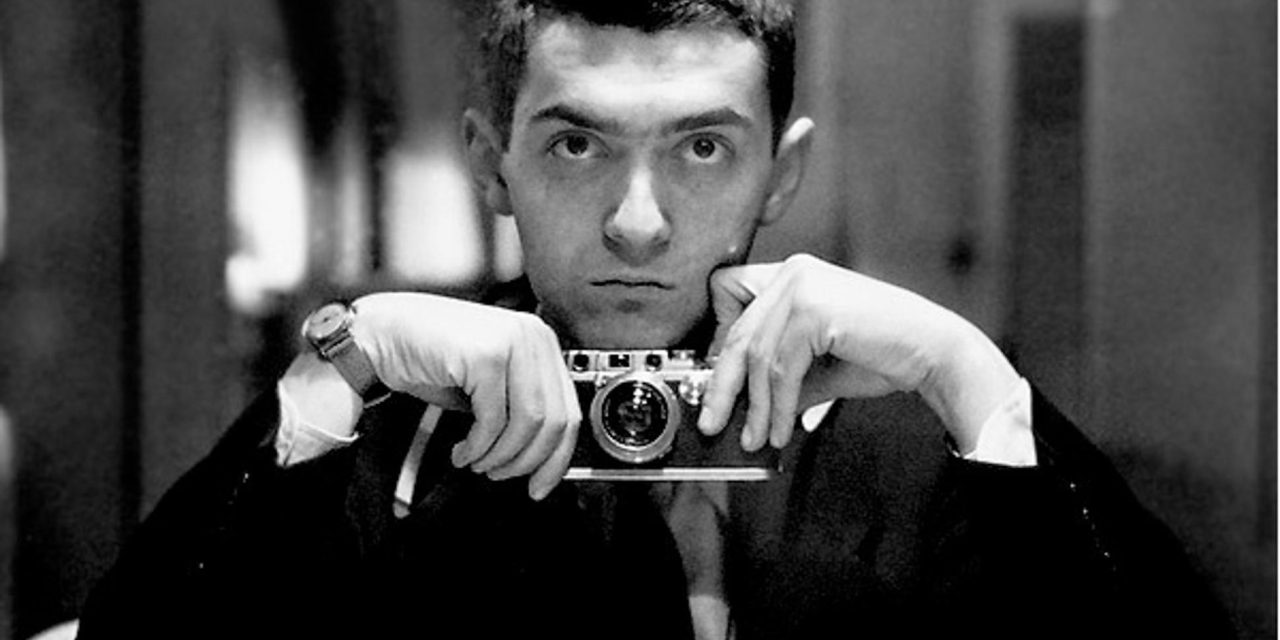
London – One of the most respected and influential filmmakers of all time, Stanley Kubrick (1928-1999), left an indelible mark on culture. Be it 2001: A Space Odyssey (1968), A Clockwork Orange (1971), The Shining (1980), or Eyes Wide Shut (1999), his films pushed boundaries and redefined the limits of cinema, leaving a lasting impression on the public consciousness that extends far beyond the screen. His influence can be seen across design, music, art, and fashion, as well as in works of countless fellow filmmakers, from Steven Spielberg to Christopher Nolan.
Now Bonhams will offer the collection of one of cinema’s true auteurs as his personal archive comes to auction for the first time. Featuring iconic props, scripts, equipment and personal possessions offered directly from the Stanley Kubrick Film Archives, The Stanley Kubrick Collection will offer fans and collectors a once-in-a-lifetime chance to own some of the most important artefacts in film history.
The live auction will take place at Bonhams 101 New Bond Street, London on Wednesday 3 February 2027, with an online auction ending on 4 February from 12pm.
Highlights from the sale include Stanley Kubrick’s Director’s Chair (estimate: £8,000-12,000), The Grady Sisters Production-Used Costumes from The Shining (estimate: £40,000-60,000), and The Original Star Child Prop from 2001: A Space Odyssey (estimate: £600,000-800,000).
The auction will be preceded by a free public exhibition of the full sale at Bonhams New Bond Street, London (18 January – 3 February 2027).
Preview exhibitions of key items will also take place at:
Bonhams New York
16 – 23 October 2026
Weekdays: 9am – 5pm
Weekends: 12pm – 5pm
Preview closes at 12pm on Friday 23 October.
111 W 57th St, New York,
NY 10019
Bonhams Los Angeles
2 – 6 November 2026
Weekdays: 9am – 5pm
7601 W. Sunset Boulevard,
Los Angeles 90046
Bonhams Paris
16 – 17, 21 & 23 – 24 November 2026
Weekdays: 10am – 6pm
Weekend: 12pm – 5pm
6 avenue Hoche,
Paris 75008
Claire Tole-Moir, Head of the Popular Culture at Bonhams, commented: “Few people have had as much of an overwhelming impact on visual culture as Stanley Kubrick. His films provide such a striking assortment of distinctive images, that you never forget your first time watching them. His precise, bold style and technical mastery is so distinctive that the word ‘Kubrickian’ even entered the English dictionary. A true visionary, Kubrick’s incredible influence cannot be overstated, and Bonhams is delighted to be able to bring his collection to auction. This is a landmark moment to get closer to some of the most iconic films ever made, explore Kubrick’s creative process, and get to know more of the man behind the camera. A once-in-a lifetime opportunity to experience the collection together for a final time, and to acquire a piece of iconic film history – we hope you join us on our odyssey into the world of Stanley Kubrick.”
Katharina Kubrick commented: “I believe Stanley is one of the few film directors whose life and movies continue to be extensively studied and revered, influencing, encouraging, and inspiring current and new generations of movie makers. Like all great artists he wasn’t afraid to “push the envelope” to achieve his uncompromising vision in his quest to make beautiful, thought-provoking films. His movies have stood the test of time and will continue to be relevant to our shared humanity as long as people love the art of great cinema.
“We are proud to be able to share with you some of the items from this unique collection, which we hope will find new homes and be cherished until it is time to pass them on to the next generation of film lovers.”
Left to right: Production-Used Clapperboard from ‘The Shining’. Estimate: £10,000-15,000.
Stanley Kubrick’s Director’s Chair. Estimate: £8,000-12,000.
2001: A Space Odyssey: Production Used Slate, 1968. Estimate: £10,000-15,000.
Highlights of the sale include:
- Stanley Kubrick’s Director’s Chair. Estimate: £8,000-12,000. †
- The Shining: The Grady Sisters Production-Used Costumes. Estimate: £40,000-60,000. *
- The Shining: A Production-Used Clapperboard. Estimate: £10,000-15,000. *
- The Shining: Jack Torrance’s Special Effects Axe from the Dick Hallorann Murder Scene, Warner Bros, 1980. Estimate: £30,000-50,000. †
- The Shining: A large oak refectory table production made in circa 1980, in the early 18th century style. Used in The Shining andlater in daily use in Stanley’s offices at home. Estimate: £15,000-20,000.
- 2001: A Space Odyssey: The Original Star Child prop. Estimate: £600,000-800,000. †
- 2001: A Space Odyssey: Stanley Kubrick’s Annotated Copy of the ‘Film Story’ Treatment Journey Beyond The Stars by Stanley Kubrick and Arthur C. Clarke, which formed the basis of Kubrick’s screenplay for 2001: A Space Odyssey. Estimate: £30,000-50,000. †
- 2001: A Space Odyssey: Production Used Slate, M.G.M., 1968. Estimate: £10,000-15,000. †
- David di Donatello Award Presented to Stanley Kubrick in 1969 for 2001: A Space Odyssey. Estimate: £8,000-12,000. *
- 2001: A Space Odyssey: A 3 1/2-inch Questar Astronomical Telescope, American, circa 1960, used by Kubrick and Arthur C. Clarke. Estimate: £5,000-7,000. ‡
- Spartacus: Stanley Kubrick’s Original Storyboard Sketches, Universal Studios, 1960. Estimate: £2,000-3,000. †
- Spartacus: Stanley Kubrick’s Personal Annotated Script, Universal Studios, 1960. Estimate: £20,000-40,000. *
- A Clockwork Orange: Philip Castle Original Promotional Artwork, Warner Brothers, 1971. Estimate: £5,000-7,000. †
- Eyes Wide Shut: Lighting Test Clapperboard, Warner Brothers, 1999. Estimate: £3,000-5,000. †
- Eyes Wide Shut: Secret Society Orgy Cloak, Warner Brothers, 1999. Estimate: £3,000-5,000. †
- Eyes Wide Shut: The Mysterious Woman’s Feathered Venetian Mask, Warner Brothers, 1999. Estimate: £3,000-5,000. ‡
- A Chess Set Owned by Stanley Kubrick. Estimate: £2,000-4,000. †
- Lolita: Stanley Kubrick’s Heavily Annotated Script. Estimate: £40,000-60,000. ‡
- Barry Lyndon:A Production-Used Clapperboard. Estimate: £5,000-7,000. ‡
- Full Metal Jacket: Philip Castle Original Key Artwork – ‘Born To Kill’ Helmet, Warner Brothers, 1987. Estimate: £10,000-15,000. †
- David di Donatello Award for Best Foreign Producer awarded to Stanley Kubrick in 1988 for Full Metal Jacket. Estimate: £3,000-5,000. †
- Artificial Intelligence A.I.: A Fangorn Original Set Design for Rouge City, Warner Brothers, 2001. Estimate: £500-700. †
- Stanley Kubrick’s Taylor-Hobson Cooke Speed Panchro Director’s viewfinder, with white label initialled “SK”, as seen on the set of The Shining. Estimate: £10,000-15,000. †
- Stanley Kubrick’s Golden Lion, Int. Film Festival Venice ‘Lifetime Achievement’ award, 1997. Estimate: £6,000-8,000. ‡
* Will be on view during the LA preview
† Will be on view during the New York preview
‡ Will be on view during the Paris Preview
Stanley Kubrick (1928-1999)
Stanley Kubrick was born in New York in 1928 and grew up in the Bronx. In the mid-1940s and early 1950s he worked as a photographer for Look magazine, supplementing his income by playing chess “for quarters” in Washington Square Park.
Believing the “best education in film is to make one,” Kubrick self-financed his first short, a 12-minute black-and-white documentary on the boxer Walter Cartier, adapted from his photo-essay for Look. The film included a backward tracking shot for a scene in which Cartier and his brother walk towards the camera, a device which later became one of Kubrick’s characteristic camera movements. Having raised $1000 presenting his short films to friends and family, Kubrick began raising funds to begin making his first feature, Fear and Desire (1953). Though the film received positive reviews, it was not a commercial success, leading Kubrick to again raise funds himself for his second feature, the boxing film Killer’s Kiss (1955).
It was while playing chess in Washington Square that Kubrick met producer James B. Harris, and in 1955 the two formed the Harris-Kubrick Pictures Corporation. The partnership led to Kubrick’s first film with a fully professional cast and crew and his first Hollywood picture, The Killing (1956). The film caught the attention of MGM who offered Kubrick and Harris $75,000 to write, direct, and produce a film, which ultimately became Paths of Glory (1957). This was followed by Spartacus (1960), which was the most expensive film ever made in America at that time, with Kubrick becoming the youngest director in the history of Hollywood to make an epic. Despite problems on set, the film received six Academy Award nominations, winning four.
For his film Lolita (1962) based on the novel by Vladimir Nabokov, Kubrick chose to shoot in England, which would become his life-long creative base. Due to a clause in the contract by producers Warner Bros. the decision also gave him complete control of the picture. Impressed by the range of actor Peter Sellers who starred in the film, Kubrick cast him in three roles for his next feature, Dr. Strangelove or: How I Learned to Stop Worrying and Love the Bomb (1964), a satire about nuclear war.
Following intense research and five years in development Kubrick made the visually spectacular sci-fi 2001: A Space Odyssey (1968). This was followed by A Clockwork Orange (1971), which became one of the most controversial films of its time due to the depiction of violence. Kubrick personally pulled A Clockwork Orange (1971) from release in the UK after receiving death threats following a series of copycat crimes said to be inspired by the film. It became unavailable legally in the UK until after Kubrick’s death and was not re-released until 2000. Both 2001: A Space Odyssey (1968) and A Clockwork Orange (1971) have since been established by critics as amongst the greatest films ever made.
Kubrick had planned to make a film of the life of the French leader Napoleon, but despite extensive research the film never came to fruition. However, his next production, the historical drama Barry Lyndon (1975), highlighted Kubrick’s obsessive eye for detail – he was known for demanding twenty or thirty retakes of the same scene. Initially shot in Ireland, the production itself was plagued with problems. After Kubrick received death threats from the IRA in 1974 due to the shooting scenes with English soldiers, he fled Ireland with his family on a ferry from Dún Laoghaire under an assumed identity and resumed filming in England. Often considered Kubrick’s finest film, Barry Lyndon (1975) was nominated for seven Academy Awards and won four.
Kubrick’s adaptation of Stephen King’s The Shining (1980) included many of the images and designs that have become so recognisably ‘Kubrickian’ and included pioneering use of Steadicam technology. It is considered a horror classic.
His penultimate film Full Metal Jacket (1987) about the Vietnam War further solidified his legacy with his trademark attention to detail as well as the use of satire, music, and production design. A derelict gasworks in Beckton in the London Docklands area posed as the ruined city of Hu?, and around 200 palm trees were imported by road from North Africa, at a cost of £1000 a tree.
Kubrick’s final picture Eyes Wide Shut (1999) featured a Manhattan couple on a sexual odyssey. Kubrick died a few days after he finished editing the film. He never saw the final version, however after seeing a preview he reportedly told Warner executive Julian Senior that it was his best film.
In 1995 Kubrick had approached Steven Spielberg with the script about a robot that resembles a child, and his efforts to become a ‘real boy’. Following Kubrick’s sudden death in 1999, Spielberg took the notes left by Kubrick and his writers and composed a new screenplay and in association with what remained of Kubrick’s production unit, Spielberg directed the film A.I. Artificial Intelligence (2001). Spielberg commented “I felt like I was being coached by a ghost,” referring to Kubrick as “the greatest master I ever served.”

SCIFI.radio is listener supported sci-fi geek culture radio, and operates almost exclusively via the generous contributions of our fans via our Patreon campaign. If you like, you can also use our tip jar and send us a little something to help support the many fine creatives that make this station possible.